Recent journal publications [1] F. Hernandez Garcia et al., "Characterization of underwater blast waves from Cu wire explosions using high-resolution pressure measurements," Physics of fluids, vol. 37, no. 8, 2025. [2] T. Coelho Leite Fava et al., "Numerical investigation of transition on a wind turbine blade under free stream turbulence at Rec=106," Journal of Fluid Mechanics, vol. 1009, 2025. [3] F. Tonti, J. Rabault and R. Vinuesa, "Deep reinforcement learning for combustion applications," Advances in Heat Transfer, vol. 60, pp. 47-85, 2025. [4] S. Habibi et al., "Elastoviscoplastic rheology suppresses drag growth in particle suspensions," Journal of Fluid Mechanics, vol. 1036, 2026. [5] F. Larosa et al., "Critical misalignments in climate pledges reveal imbalanced sustainable development pathways," Nature Communications, vol. 17, no. 1, 2026. See other publications here .
External events CISM Advanced course on Continuous modelling of complex fluid 14 Sep 2026 ICAS 2026, Congress of the International Council of the Aeronautical Science 13 Sep 2026 TSFP14, International Symposium on Turbulence and Shear Flow Phenomena 28 Jul 2026 10th World Congress on Biomechanics 11 Jul 2026 Bifurcation and Instability in Fluid Dynamics 6 Jul 2026 EUROMECH Colloquium: Coherent Structures in Multiphysics Flows: Modelling, Control and Interpretatio 1 Jul 2026 CISM Advanced course on Mechanics of the deep lung 29 Jun 2026
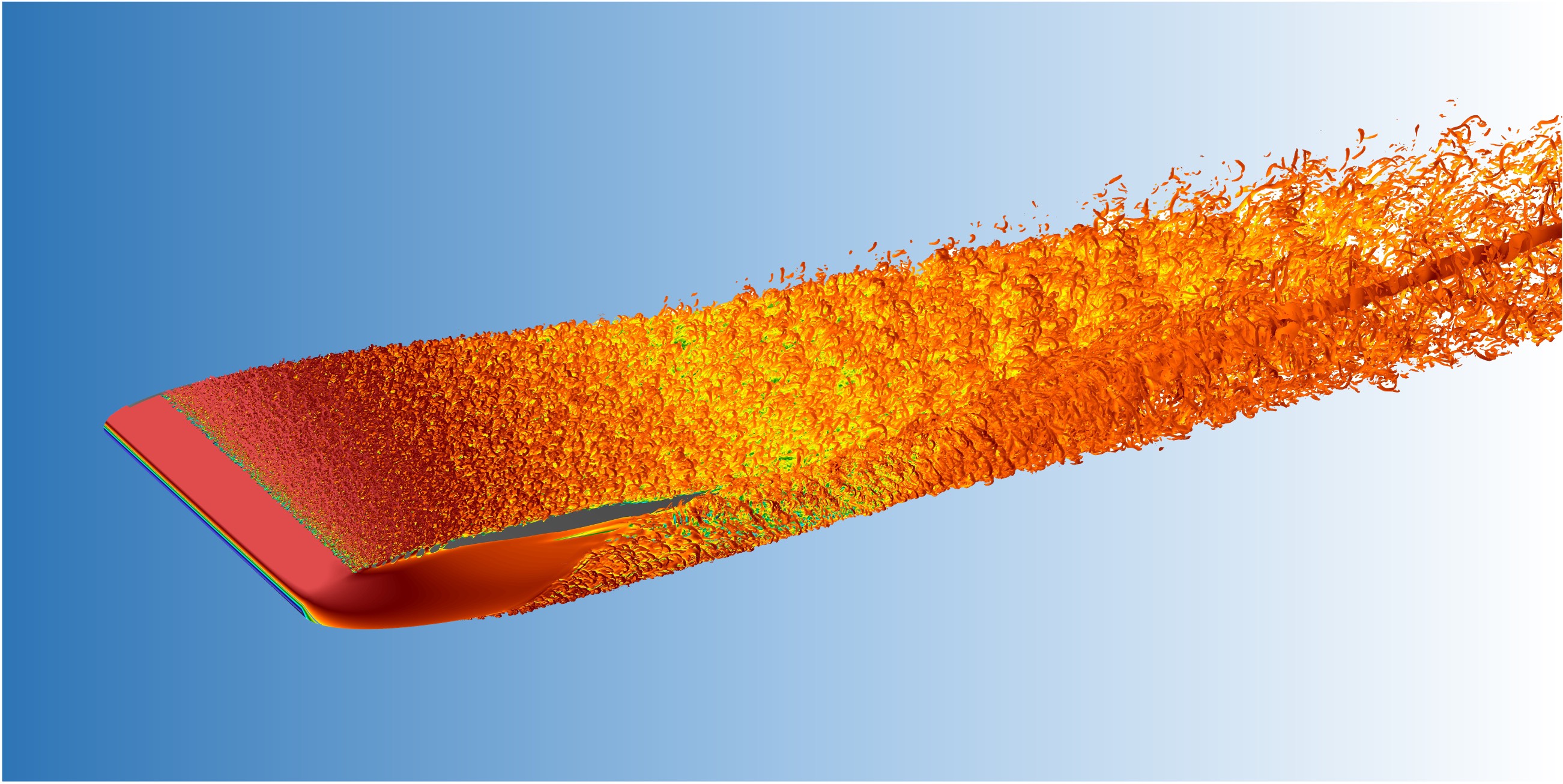
CISM Advanced course on Continuous modelling of complex fluid 14 Sep 2026 ICAS 2026, Congress of the International Council of the Aeronautical Science 13 Sep 2026 TSFP14, International Symposium on Turbulence and Shear Flow Phenomena 28 Jul 2026 10th World Congress on Biomechanics 11 Jul 2026 Bifurcation and Instability in Fluid Dynamics 6 Jul 2026 EUROMECH Colloquium: Coherent Structures in Multiphysics Flows: Modelling, Control and Interpretatio 1 Jul 2026 CISM Advanced course on Mechanics of the deep lung 29 Jun 2026
News NVIDIA donates GPUs to support a FLOW project 11 Jun 2026 FLOW work highlighted as an Editor’s Suggestion in Physical Review Fluids 16 Mar 2026 FLOW work published in Nature 28 Jan 2026
News NVIDIA donates GPUs to support a FLOW project 11 Jun 2026 FLOW work highlighted as an Editor’s Suggestion in Physical Review Fluids 16 Mar 2026 FLOW work published in Nature 28 Jan 2026